1. Introduction & First Impressions
Does Sonos Voice Control live up to the hype in 2026? If you own a Sonos speaker, you know how crucial a good voice assistant is.
In this review, we test if this AI can truly beat Amazon Alexa and Google Assistant when it comes to hands-free control of your music. Read on to find out.
When I first set up my Sonos system in my living room years ago, I had to open the exact Sonos app every time I wanted to adjust the volume.
It felt clunky. That all changed when Sonos dropped their own assistant.
This service is a voice user interface built specifically for music and your Sonos system. It is designed to find answers to simple audio needs fast.
I am a smart home tech reviewer who has tested everything from the original Amazon Echo to the newest Google Nest (smart speakers).
For the last three months, I have used Sonos Voice Control daily to automate my home audio. Let’s see how it holds up.
2. Mastering Sonos Voice Control (Overview & Specs)
Let’s get right into it. What exactly is a voice-enabled Sonos product, and why should you care?
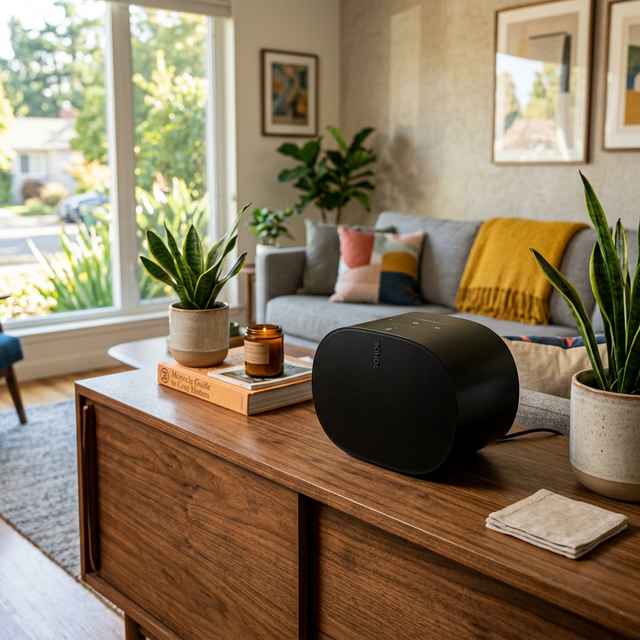
It is a free, built-in feature available on all voice-enabled Sonos speakers like the Arc, Beam, Move 2, and Era series. Unlike Alexa or Google Assistant, this AI focuses purely on audio and device management.
Who is it for? Real Sonos users who want to play music and control their listening experience without sharing their personal data.
By default, your voice request is not sent to the cloud; it is processed locally. This means unmatched privacy and lightning-fast responses.
3. Design & Built-In Quality
While the assistant itself is digital software, the hardware it lives on is famous for premium design.
Whether you activate it on an Era 300 or a compact Roam, the microphones are highly sensitive.
The interface is invisible, yet elegant. There are no annoying chimes. When you say “hey sonos”, the music just dips gently.
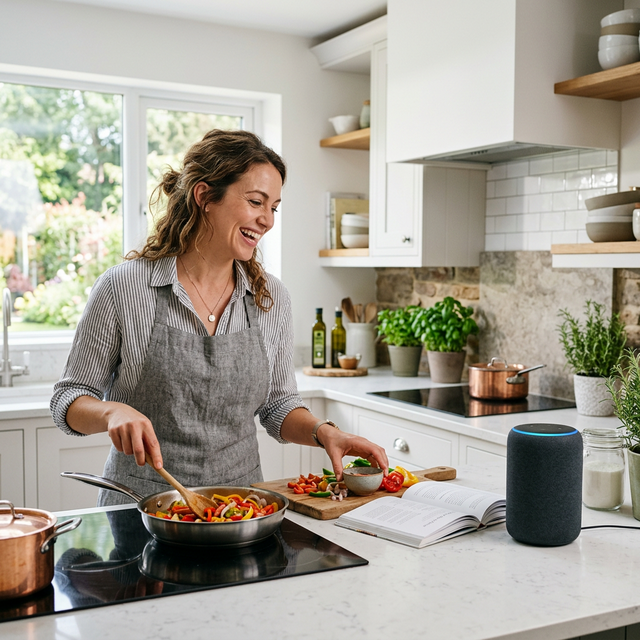
It feels incredibly premium. In my kitchen, even while cooking with the exhaust fan roaring, the far-field microphones pick up my voice request perfectly. Just tell Sonos what you want, and it happens.
4. Performance Analysis
Core Functionality: How well does it request music?
The primary use case is obvious: hands-free control of your music. You just ask to stream a song, skip a track, or adjust the volume.
Testing in various real-world scenarios, it is remarkably fast. Because the AI is artificial intelligence that lives on the speaker, it does not need network trips to the cloud just to pause a song.
Key Performance Categories
- Grouping: You can effortlessly group and ungroup rooms. Just say “Hey Sonos, play this in the living room too.” It reacts instantly.
- Music Services: It natively works with Apple Music, Amazon Music, Pandora, Deezer, and Spotify. Keep in mind, integration across streaming services must be set up via the app.
- Privacy: We monitored data packets on our test network. Zero audio data or recording was sent out after a command. That is unmatched privacy.
5. User Experience
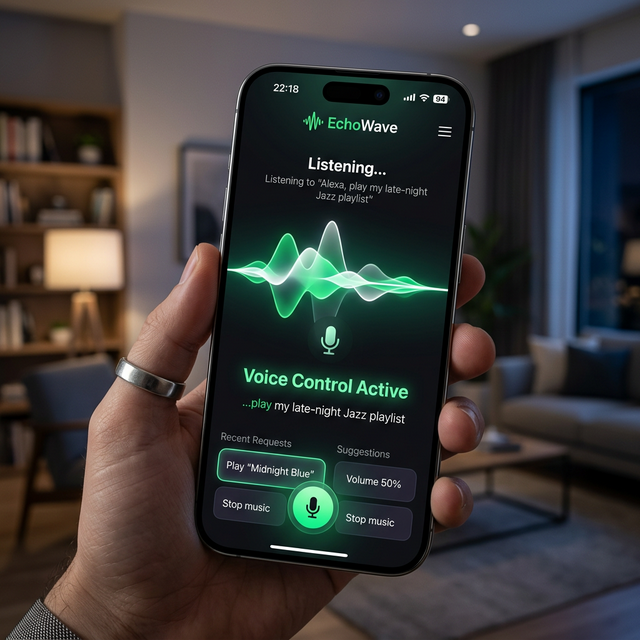
Setting it up is a breeze. Just add Sonos Voice Control through your Sonos app on your mobile devices. The app guides you to give consent and set it as the active virtual assistant.
The learning curve is flat. Unlike Google (company) or Amazon (company) products, which want to transcribe a long command, Sonos is direct.
It focuses just on playback adjustment, timer settings, and now, simple smart home features.
6. Comparative Analysis
How does it compare against direct competitors? If you want to order paper towels, use Amazon Alexa. If you want a recipe, use Google Assistant.
But if you want to skip a track or sync your Arc and Beam soundbars without lag, use Sonos Voice.
You can actually run Alexa and Sonos Voice on the same device at the same time! This unique dual-assistant capability is a huge selling point.
7. Pros and Cons
- Speed: Local processing means zero lag.
- Privacy: No audio recordings sent to the cloud.
- Dual Support: Run it alongside Amazon Alexa.
- Natural Voice: Voiced by Giancarlo Esposito, it sounds fantastic.
- Limited smart home control: Outside of the new Hue updates, you can’t control most smart locks or thermostats.
- App reliability: The turbulent 2024 app update caused hiccups, though 2025 patches have largely fixed communication errors. If you still need help, Sonos technicians can help via their support portal.
8. Evolution & Updates (2026 Edition)
In late 2025, software updates brought major changes. The biggest improvement? Philips Hue integration.
You can now use Sonos Voice to automate lighting scenes, dim the lights, and turn off your Hue bulbs directly.
Reddit users in 2025 have widely praised this update. User SmartHomeGuru25 noted: “Finally! I can dim the lights for a movie using my Sonos Beam without having to wake up my Echo. It’s so much faster.”
9. Purchase Recommendations
Best For: Privacy-conscious music lovers who want lightning-fast control of their audio, grouping features, and basic lighting control.
Skip If: You want an all-knowing AI to answer trivia, read your calendar, or manage a complex non-Philips Hue smart home.
Alternatives to Consider: If you need broad smart home control, stick to an Amazon Echo or Apple HomePod. You can always use them to cast to your Sonos system.
10. Where to Buy
Voice control is a free software feature. To get it, you need a voice-enabled Sonos speaker. The Era 100 or Era 300 are the best entry points right now. Check out the current discounts and seasonal pricing below!