Wireless Soundbars vs Traditional Systems
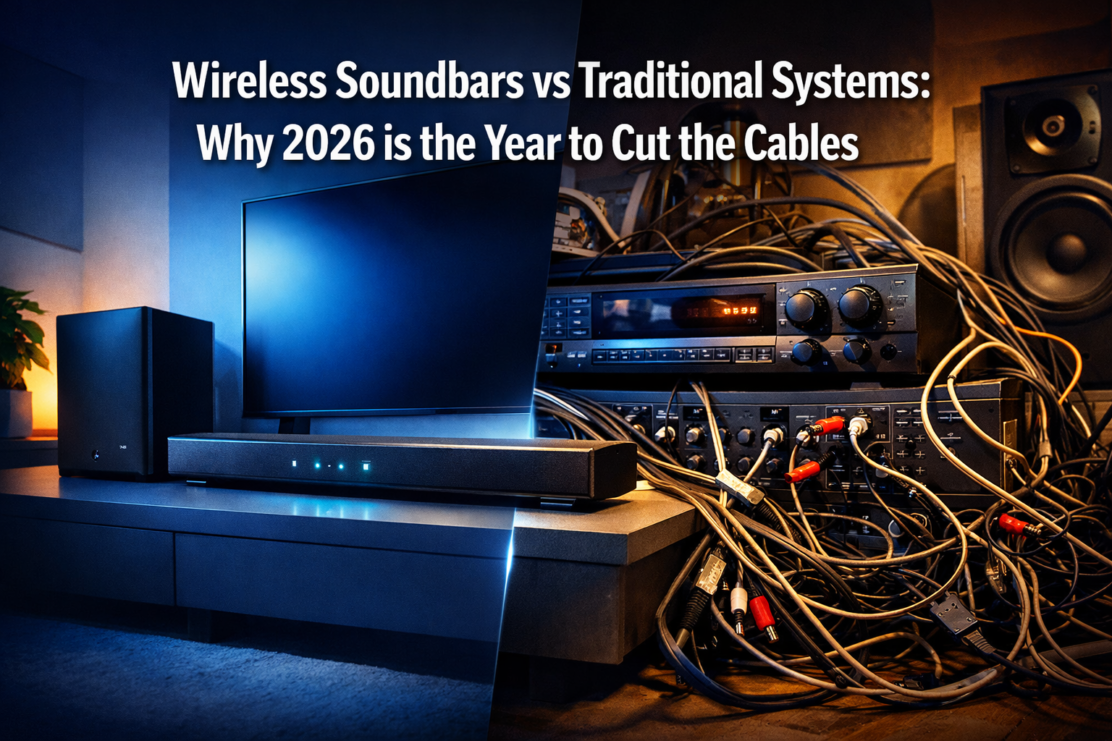
The home audio landscape is experiencing a revolution. As we navigate through 2026, the debate between Wireless Soundbars vs Traditional Systems: Why 2026 is the Year to Cut the Cables has reached a tipping point.
Gone are the days when audiophiles had to choose between pristine sound quality and installation convenience.
Modern wireless technology has evolved to deliver low-latency performance, high-resolution audio, and seamless streaming capabilities that rival—and in some cases surpass—traditional wired setups. 🎵
The transformation isn’t just about cutting cables; it’s about reimagining how we experience sound in our homes.
With innovations like Dolby Atmos FlexConnect, LE Audio protocols, and AI-powered room calibration, wireless soundbars are shattering the limitations that once made traditional systems the only choice for serious listeners.
Whether you’re a competitive gamer demanding millisecond-precise audio sync, a movie enthusiast craving immersive surround sound, or a music lover seeking studio-quality playback, 2026’s wireless offerings deliver on all fronts.
Key Takeaways
- Wireless technology has matured significantly: Modern soundbars support Wi-Fi 6E, Bluetooth 5.3, and emerging LE Audio standards, delivering latency as low as 15-20ms—ideal for gaming and real-time content.
- Installation simplicity wins for most users: Flagship wireless soundbars eliminate complex wiring, speaker placement calculations, and AV receiver configuration while delivering comparable audio performance to traditional systems.
- Smart integration sets wireless apart: Built-in voice assistants, streaming platform support, and ecosystem connectivity make wireless soundbars the hub of modern smart homes.
- Traditional systems retain advantages for purists: Physical speaker placement still delivers superior stereo imaging and soundstage depth, particularly in acoustically optimized rooms.
- Market momentum favors wireless solutions: CES 2026 showcased major innovations from Samsung, LG, and other manufacturers, with wireless audio systems dominating new product launches and consumer adoption trends[2].
Understanding the Wireless Revolution in Home Audio
The Technology Behind Modern Wireless Soundbars
The wireless soundbar market has undergone dramatic technological advancement in 2026. Unlike earlier generations plagued by audio lag, compression artifacts, and connectivity dropouts, today’s systems leverage multiple wireless protocols to deliver pristine audio quality.
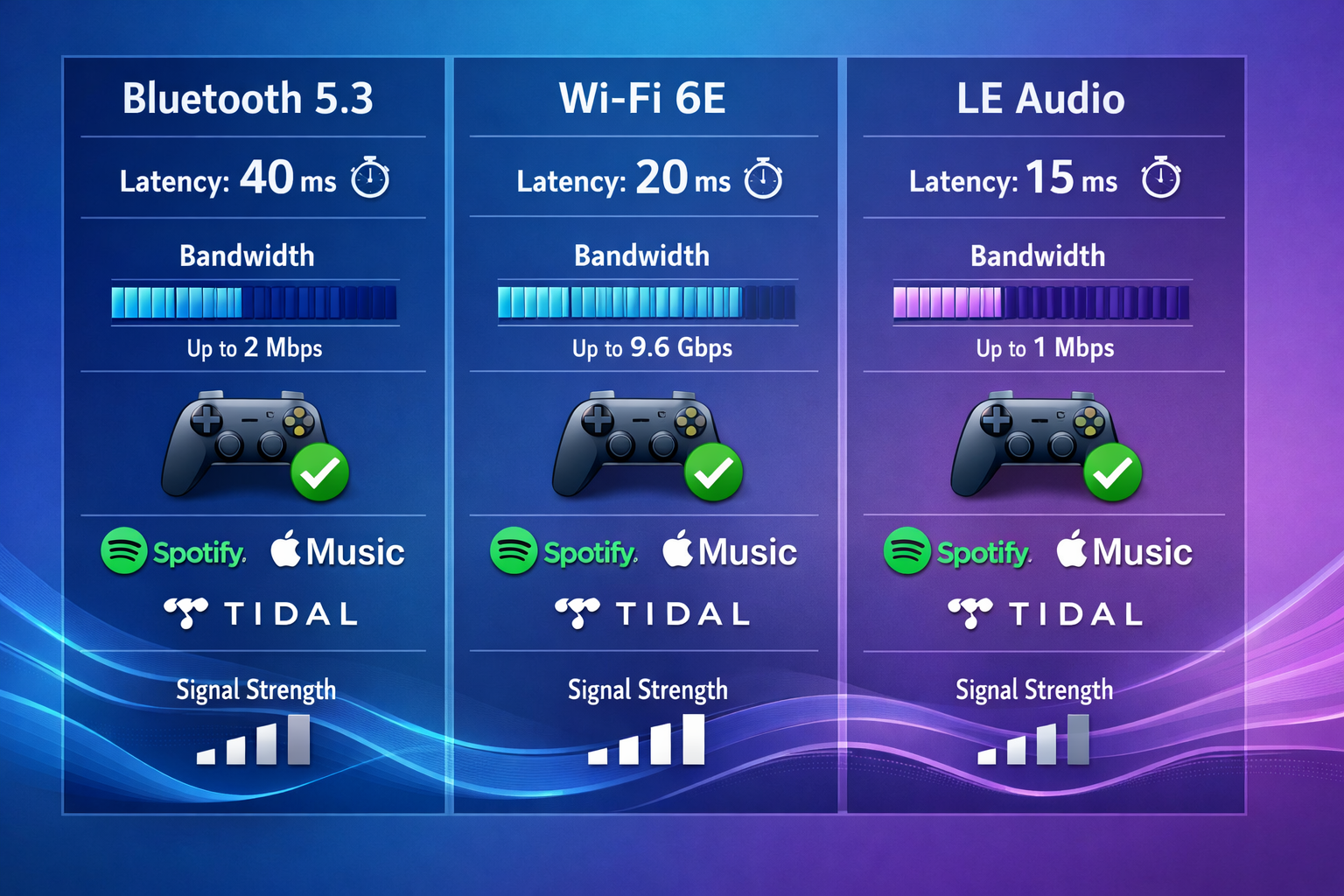
Bluetooth 5.3 now offers extended range up to 800 feet in optimal conditions, improved power efficiency, and enhanced audio codec support including aptX Adaptive and LDAC. These codecs enable high-resolution audio transmission at 24-bit/96kHz, matching the quality previously exclusive to wired connections[2].
Wi-Fi 6E integration represents perhaps the most significant leap forward.
Operating on the less-congested 6GHz band, Wi-Fi-enabled soundbars achieve latency as low as 20 milliseconds—imperceptible to human ears and perfect for gaming scenarios where audio-visual synchronization is critical.
This technology also enables multi-room audio capabilities, allowing users to create whole-home sound systems without running cables through walls[5].
The emerging LE Audio (Low Energy Audio) standard promises even better performance.
Built on Bluetooth technology but fundamentally redesigned, LE Audio delivers higher quality sound at lower bitrates, extended battery life for wireless components, and broadcast audio capabilities.
Early implementations show latency dropping to 15 milliseconds, making wireless soundbars genuinely competitive with wired systems for the first time[7].
Traditional Systems: The Wired Foundation
Traditional home theater systems built around AV receivers and discrete speakers have dominated the audiophile market for decades.
These systems typically consist of five to nine separate speakers, one or two subwoofers, and a central receiver that processes audio signals and powers each speaker through dedicated cables.
The fundamental advantage of traditional systems lies in physical speaker placement.
By positioning speakers at precise locations around the listening area, these systems create authentic surround sound where audio genuinely originates from specific directions.
A helicopter flying overhead in a movie sounds like it’s actually above you because sound is coming from ceiling-mounted speakers, not simulated through psychoacoustic processing[1][6].
Traditional systems also excel at stereo imaging—the ability to create a convincing soundstage where instruments and voices appear at specific locations between and beyond the speakers.
This characteristic makes traditional systems particularly appealing for critical music listening, where spatial accuracy and tonal neutrality matter most[1].
However, traditional systems demand significant investment beyond equipment costs.
Installation requires running speaker wire through walls or along baseboards, calculating optimal speaker angles, calibrating levels, and often making permanent modifications to living spaces.
For renters or those unwilling to commit to extensive installation projects, these requirements represent deal-breaking obstacles[3].
Wireless Soundbars vs Traditional Systems: Performance Comparison for 2026
Audio Quality: Closing the Gap
The audio quality gap between wireless soundbars and traditional systems has narrowed dramatically in 2026. Premium soundbars now incorporate 11-channel processing, dual subwoofers, and upward-firing drivers for Dolby Atmos height effects, delivering genuinely immersive experiences[2].
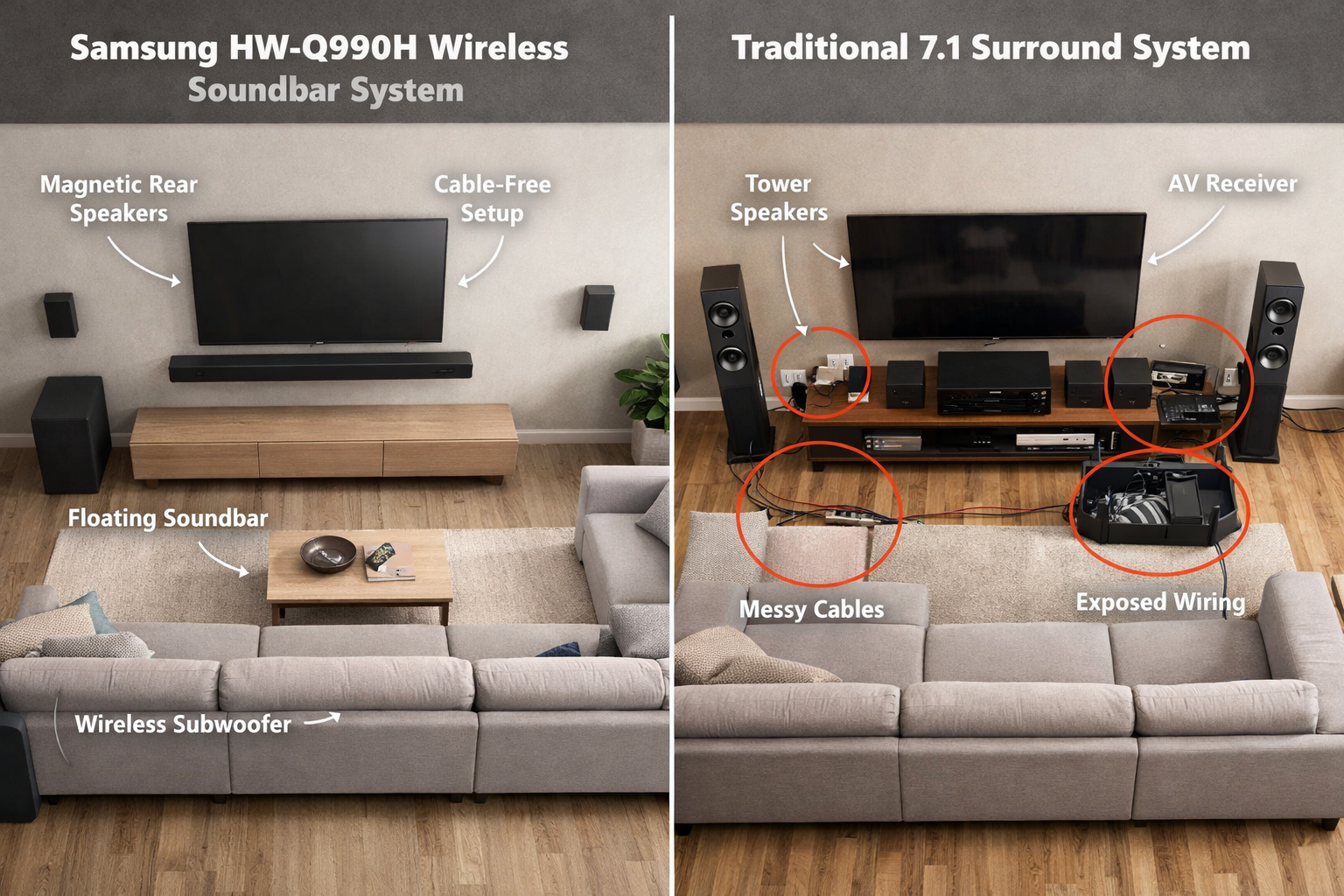
Samsung’s flagship HW-Q990H exemplifies this evolution. With 11 channels configured in a 7.0.2 arrangement and dual 8-inch subwoofers, this wireless system produces room-filling sound that rivals traditional 7.1 setups costing thousands more.
The system includes wireless rear speakers that magnetically dock for charging, eliminating the cable management nightmares associated with traditional surround systems[2].
High-resolution audio support has become standard across premium wireless soundbars.
Models from Samsung, LG, and Focal now handle 24-bit/96kHz audio files with wide frequency response, satisfying even demanding audiophiles who previously dismissed soundbars as inferior[2].
The best wireless soundbar options for 2026 showcase this technological maturity across multiple price points.
That said, traditional systems maintain advantages in specific scenarios. Soundstage width remains superior with physically separated speakers, particularly for stereo music listening.
The psychoacoustic processing that allows soundbars to simulate surround effects works best in specific room configurations and listening positions, while traditional systems deliver consistent performance regardless of where listeners sit[1][6].
Installation and Setup: Convenience Wins
Installation complexity represents the most significant differentiator between wireless soundbars and traditional systems. Modern soundbars can be operational within 15 minutes of unboxing—simply connect power, link to the TV via HDMI ARC or eARC, and complete basic setup through an app[5].
LG’s revolutionary H7 FlexConnect soundbar with Dolby Atmos FlexConnect technology takes convenience even further.
This system automatically calibrates sound for optimal immersive audio regardless of speaker placement, eliminating the precise positioning requirements that make traditional systems challenging[2].
Users can place components wherever they fit in their room, and the system adapts.
Wireless rear speakers have eliminated one of soundbars’ historical weaknesses. Premium models now include battery-powered wireless surrounds that charge via magnetic docking stations, requiring zero permanent installation.
This design proves particularly valuable for renters or those who frequently rearrange furniture[3].
For those interested in gaming-optimized wireless soundbars, this flexibility allows quick reconfiguration between movie and gaming setups.
Traditional systems demand substantially more effort. Running speaker wire through walls requires drilling, fishing cables, and often professional installation.
Calculating speaker angles, setting crossover frequencies, calibrating individual channel levels, and configuring bass management all require technical knowledge that intimidates mainstream consumers[7].
Smart Features and Ecosystem Integration
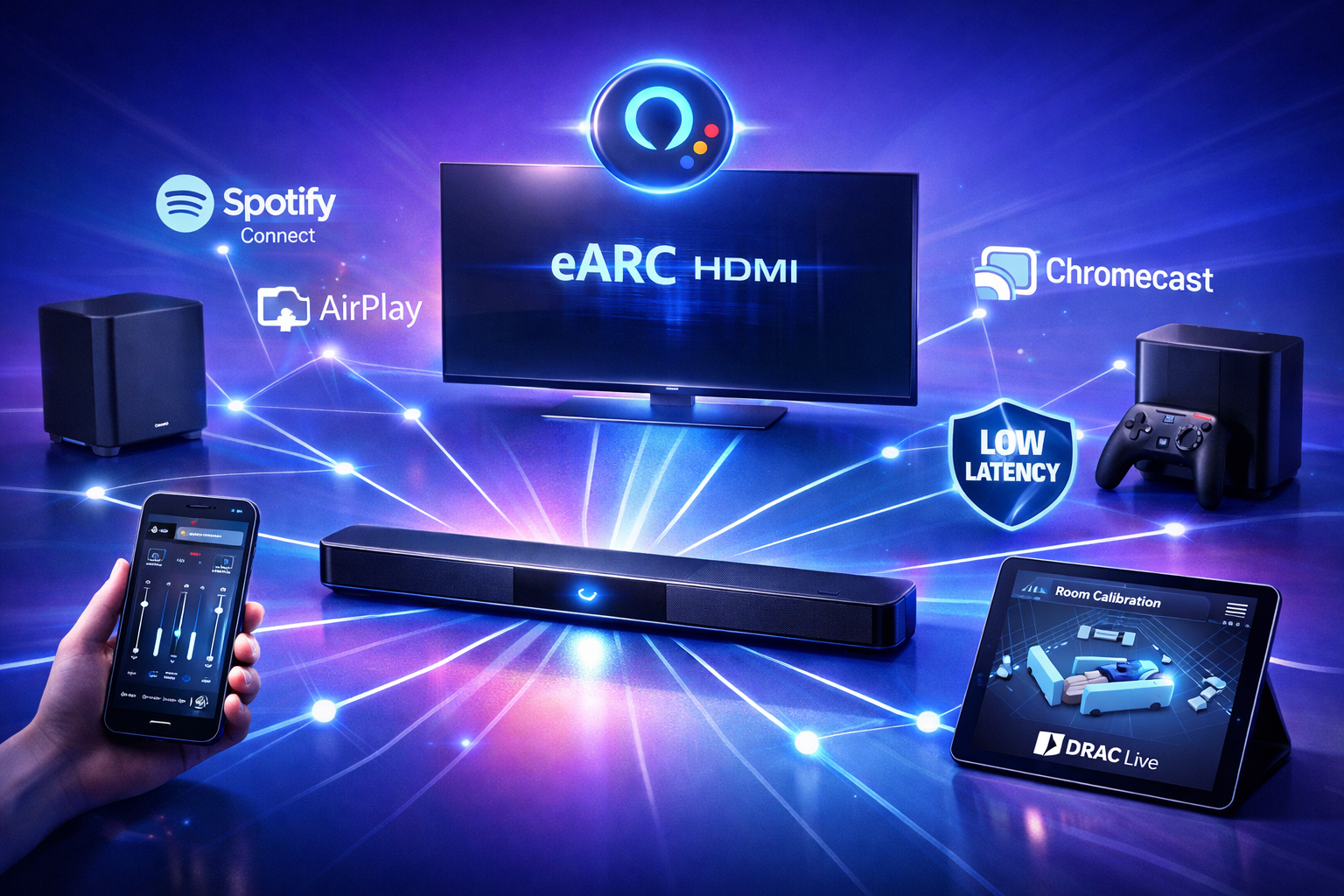
Smart home integration represents territory where wireless soundbars dominate completely. Built-in voice assistants (Alexa, Google Assistant), streaming platform access (Spotify Connect, Apple AirPlay, Chromecast Audio), and app-based control come standard on modern wireless soundbars[1].
This ecosystem connectivity transforms soundbars into entertainment hubs. Users can ask Alexa to play specific songs, adjust volume, or switch inputs without touching a remote.
Multi-room audio features allow synchronized playback across multiple soundbars throughout the home. Firmware updates delivered over Wi-Fi add new features and improve performance over time[5].
Traditional systems typically require separate smart home integration through add-on devices.
While high-end AV receivers increasingly include network connectivity and voice control, the implementation often feels less refined than purpose-built soundbar solutions.
Understanding how to wirelessly connect soundbars to TVs has become increasingly straightforward with modern wireless protocols.
The streaming-first design of wireless soundbars aligns perfectly with how people consume content in 2026. Direct access to Spotify, Tidal, and other services without turning on the TV makes soundbars convenient music playback devices, not just home theater components[2].
Gaming and Low-Latency Performance: Why 2026 Changes Everything
The Latency Challenge Solved
Audio latency—the delay between visual action and corresponding sound—has historically plagued wireless audio systems.
Even 50-100 millisecond delays create noticeable lip-sync issues during dialogue and devastating disadvantages in competitive gaming where hearing enemy footsteps milliseconds earlier determines victory.
2026’s wireless technology has effectively solved this challenge. Wi-Fi 6E implementations in premium soundbars achieve 20-millisecond latency, while emerging LE Audio standards push this down to 15 milliseconds—well below the 30-millisecond threshold where most people detect delay[7].
For gamers, this represents a transformative shift. Wireless soundbars optimized for gaming now deliver competitive-grade audio performance without the cable clutter.
Features like Game Mode automatically reduce processing delay even further, ensuring audio and video remain perfectly synchronized during fast-paced gameplay.
The JBL Bar 1300X exemplifies gaming-focused wireless design, with dedicated low-latency modes and detachable battery-powered rear speakers that can be positioned optimally for directional audio cues critical in first-person shooters.
Streaming Quality and Bandwidth
Bandwidth capacity determines how much audio information wireless systems can transmit. Traditional Bluetooth struggled to deliver high-quality multi-channel audio, forcing compromises in resolution or channel count.
Wi-Fi 6E’s massive bandwidth capacity eliminates these limitations entirely. Modern wireless soundbars can transmit uncompressed 7.1.2 Dolby Atmos signals without quality loss, matching wired HDMI connections.
This capability enables lossless audio streaming from services like Apple Music and Tidal, delivering studio-master quality to wireless speakers[2].
The practical impact is significant: users can stream high-resolution audio files, enjoy Dolby Atmos content from Netflix and Disney+, and experience bit-perfect playback without the cable infrastructure traditional systems require.
Soundbars with wireless subwoofers particularly benefit from this bandwidth, as the subwoofer receives full-range uncompressed signals for precise bass reproduction.
Market Trends and 2026 Forecasts
CES 2026: The Wireless Audio Showcase
The Consumer Electronics Show in January 2026 confirmed wireless audio’s dominance. Major manufacturers including Samsung, LG, Klipsch, Focal, and Marantz unveiled flagship products focused exclusively on wireless technologies[2].
Samsung’s announcements epitomized the trend. Beyond the HW-Q990H flagship, Samsung introduced the more affordable HW-QS90H (7.1.2 channels) and the audiophile-focused Music Studio LS70H wireless speaker with 24-bit/96kHz support.
These products span price points from mid-range to premium, bringing wireless technology to broader markets[2].
LG’s H7 FlexConnect with Dolby Atmos FlexConnect technology garnered particular attention. By eliminating precise placement requirements, this innovation addresses one of the last remaining advantages of traditional systems—the ability to optimize speaker positioning for room acoustics[2].
The introduction of Samsung and Google’s Eclipsa Audio—a spatial audio format competing with Dolby Atmos and DTS:X—signals continued innovation in wireless audio processing.
While content availability remains limited in early 2026, the format’s existence demonstrates manufacturers’ commitment to advancing wireless capabilities[4].
Consumer Adoption and Market Growth
Market research indicates wireless soundbar adoption is accelerating dramatically in 2026. Factors driving this growth include:
- Streaming service dominance: With most households consuming content through Netflix, Disney+, and other streaming platforms rather than physical media, the convenience of wireless systems aligns perfectly with viewing habits
- Smart home integration: As homes become increasingly connected, soundbars that function as entertainment hubs gain appeal over single-purpose traditional systems
- Rental market growth: Rising rental rates and housing mobility favor non-permanent audio solutions that move easily between residences[5]
- Price competitiveness: Premium wireless soundbars now deliver comparable performance to traditional systems costing 2-3 times more when installation labor is factored in
The best soundbar options for 2026 reflect this market evolution, with wireless connectivity and smart features becoming baseline expectations rather than premium add-ons.
Room Calibration Technology
Automatic room calibration has emerged as a critical differentiator in 2026. Advanced systems from Klipsch and Focal now incorporate Dirac Live digital room correction, which analyzes room acoustics and adjusts frequency response to compensate for acoustic problems caused by room shape, furniture placement, and wall materials[2].
This technology addresses a fundamental limitation of both soundbars and traditional systems: room acoustics dramatically impact sound quality.
Standing waves, reflections, and absorption create frequency response irregularities that color audio.
Dirac Live and similar systems measure these issues and apply corrective equalization, delivering more accurate sound regardless of room conditions.
For wireless soundbars, room correction partially compensates for the limitations of virtual surround processing. By optimizing frequency response for the specific listening environment, these systems extract maximum performance from their drivers.
Traditional systems benefit similarly, though their superior physical speaker placement provides advantages that calibration alone cannot replicate[2].
When Traditional Systems Still Make Sense
The Audiophile Perspective
Despite wireless advances, dedicated audiophiles often prefer traditional systems for critical listening. The reasons extend beyond mere nostalgia:
Physical speaker separation creates soundstage characteristics impossible to fully replicate through psychoacoustic processing. When listening to orchestral music or jazz recordings, the ability to pinpoint individual instruments at specific locations within a three-dimensional space remains superior with discrete speakers positioned around the room[1].
Upgradability represents another advantage. Traditional systems allow component-by-component upgrades—replacing just the amplifier, adding better speakers, or upgrading the subwoofer independently. Soundbars function as integrated units where upgrading typically means replacing the entire system[6].
Power handling favors traditional systems for very large rooms. While soundbars have grown more powerful, dedicated tower speakers driven by robust amplifiers can fill spaces that would overwhelm even premium soundbars. For home theaters exceeding 500 square feet, traditional systems often deliver better results[7].
Those seeking the best soundbar for music should carefully evaluate whether wireless convenience outweighs the sonic advantages traditional stereo systems provide for critical listening.
Specific Use Cases for Wired Systems
Certain scenarios still favor traditional wired systems:
- Dedicated home theaters: Rooms designed specifically for movie watching benefit from permanent speaker installation and acoustic treatment that optimizes traditional system performance
- Large open spaces: Great rooms and open-concept living areas exceeding 400-500 square feet may require the power and coverage traditional systems provide
- Existing installations: Homes with in-wall or in-ceiling speakers already installed gain little benefit from switching to soundbars
- Extreme budget constraints: Entry-level traditional systems can be assembled from used components for less than comparable soundbars, though this requires technical knowledge[7]
Understanding how to choose the right soundbar versus committing to a traditional system depends heavily on these use-case considerations.
Making the Decision: Wireless Soundbars vs Traditional Systems in 2026
Evaluation Framework
When deciding between Wireless Soundbars vs Traditional Systems: Why 2026 is the Year to Cut the Cables, consider these factors:
Room Size and Configuration
- Rooms under 300 square feet: Wireless soundbars excel
- 300-500 square feet: Either system works well; choose based on other factors
- Over 500 square feet: Traditional systems may provide better coverage
Primary Use Case
- Movie and TV watching: Wireless soundbars offer excellent performance with easier setup
- Critical music listening: Traditional stereo systems maintain advantages for audiophiles
- Gaming: Low-latency wireless soundbars now match traditional system performance
- Mixed use: Premium wireless soundbars handle all scenarios competently[5]
Installation Flexibility
- Renters or frequent movers: Wireless soundbars provide portability
- Homeowners willing to make permanent modifications: Traditional systems become viable
- Aesthetic priorities: Wireless systems minimize visible cables and components[3]
Budget Considerations
- Under $500: Quality wireless soundbars outperform traditional systems at this price point
- $500-$1,500: Premium wireless soundbars compete directly with mid-range traditional setups
- Over $1,500: Both options deliver excellent performance; choose based on priorities[4]
Top Wireless Soundbar Recommendations for 2026
Based on 2026’s technological landscape, these wireless soundbars represent the cutting edge:
Samsung HW-Q990H – The flagship 11-channel system with dual subwoofers and wireless rear speakers delivers authentic surround sound without wiring complexity. Ideal for serious home theater enthusiasts who want traditional system performance without installation hassles[2].
LG H7 FlexConnect – Revolutionary Dolby Atmos FlexConnect technology makes this the most flexible soundbar available, automatically optimizing sound regardless of speaker placement. Perfect for challenging room layouts[2].
JBL Bar 1300X – Gaming-focused design with detachable battery-powered rear speakers and ultra-low latency makes this the top choice for gaming audio. Versatile enough for movies and music too.
Sonos Beam Gen 2 – Compact design with excellent smart home integration and multi-room audio capabilities. The Sonos Beam Gen 2 balances performance, features, and value for smaller rooms.
Samsung HW-QS90H – More affordable than the Q990H while maintaining 7.1.2 channel performance. Represents the sweet spot between capability and cost for most users[2].
Setup and Optimization Tips
Maximizing wireless soundbar performance requires attention to placement and configuration:
Physical Placement
- Position the main soundbar directly below or above the TV, centered
- Place the wireless subwoofer near a wall (but not in a corner) for optimal bass response; see our subwoofer placement guide for details
- Position wireless rear speakers 2-3 feet behind the primary listening position at ear height
- Ensure clear line-of-sight between wireless components when possible[5]
Connection Optimization
- Use HDMI eARC for the highest quality audio and simplest control
- Connect to a 5GHz or 6GHz Wi-Fi network for streaming to minimize interference
- Enable “Game Mode” or “Low Latency Mode” when gaming to reduce audio delay
- Update firmware regularly to access performance improvements and new features[7]
Calibration
- Run automatic room calibration if available (Dirac Live, Samsung SpaceFit, etc.)
- Adjust subwoofer level to taste—most users prefer settings 2-3 dB below reference
- Experiment with sound modes for different content types (Movie, Music, Game, Voice)
- Fine-tune dialogue clarity using center channel level adjustments if available
For those connecting to specific TV brands, our guides on connecting soundbars to Samsung TVs provide detailed setup instructions.
The Future of Home Audio: Beyond 2026
Emerging Technologies
The wireless audio revolution continues accelerating beyond 2026. Technologies on the horizon include:
Spatial Audio Advancement – Apple’s Spatial Audio, Sony 360 Reality Audio, and Samsung/Google’s Eclipsa Audio will mature with increased content availability. These formats promise even more convincing surround effects from wireless soundbars[4].
AI-Powered Optimization – Machine learning algorithms will continuously analyze room acoustics and listening preferences, automatically adjusting sound characteristics for optimal performance without manual calibration[2].
LE Audio Maturation – As LE Audio becomes standard across devices, wireless soundbars will achieve even lower latency, better power efficiency, and new capabilities like audio sharing and broadcast reception[7].
Modular Wireless Systems – Future soundbars may adopt modular designs where users can add wireless speakers incrementally, creating customized configurations that blend soundbar convenience with traditional system flexibility.
The Verdict: Why 2026 Favors Wireless
The evidence overwhelmingly supports wireless soundbars for most users in 2026. Technological maturity has eliminated the performance compromises that once made traditional systems necessary for quality audio.
Low-latency wireless protocols enable competitive gaming, high-resolution streaming delivers audiophile-grade playback, and smart home integration provides convenience impossible with traditional systems.
Installation simplicity cannot be overstated. The ability to achieve immersive surround sound in under 30 minutes without drilling holes, running cables, or calculating speaker angles makes wireless soundbars accessible to everyone, not just dedicated enthusiasts willing to invest weekends in installation projects[3].
Market momentum confirms this assessment. CES 2026 showcased manufacturers’ commitment to wireless innovation, with flagship products from every major brand emphasizing wireless capabilities, flexible placement, and smart features.
Traditional systems received minimal attention, relegated to niche applications for extreme audiophiles[2].
That said, traditional systems retain relevance for specific users: dedicated audiophiles with acoustically treated listening rooms, homeowners with existing in-wall speaker installations, and those seeking maximum performance in very large spaces.
These scenarios represent the minority of consumers in 2026’s market landscape.
For the vast majority—renters, mainstream consumers, gamers, and those seeking convenience without sacrificing quality—Wireless Soundbars vs Traditional Systems: Why 2026 is the Year to Cut the Cables isn’t really a debate anymore. Wireless has won. 🎉
Conclusion
The transformation of home audio in 2026 marks a definitive turning point.
Wireless soundbars have evolved from convenient compromises into legitimate high-performance alternatives that match or exceed traditional systems for most applications.
Technologies like Wi-Fi 6E, LE Audio, Dolby Atmos FlexConnect, and AI-powered room calibration have eliminated the latency, quality, and flexibility limitations that once made wired systems the only serious option.
The market has spoken clearly. CES 2026 demonstrated manufacturer commitment to wireless innovation, with flagship products from Samsung, LG, and other leaders focusing exclusively on wireless capabilities.
Consumer adoption continues accelerating as streaming-first content consumption, smart home integration, and rental market growth favor non-permanent audio solutions.
Traditional wired systems maintain advantages for dedicated audiophiles, existing installations, and very large spaces, but these scenarios represent a shrinking minority.
For most users seeking the best balance of performance, convenience, and value, wireless soundbars deliver superior results with dramatically less complexity.
Next Steps
Ready to cut the cables? Here’s your action plan:
- Assess your space – Measure your room and identify where components can be placed
- Define priorities – Determine whether movies, music, gaming, or mixed use matters most
- Set your budget – Premium wireless soundbars start around $500; flagship models reach $1,500-$2,000
- Research specific models – Check our comprehensive wireless soundbar guide for detailed comparisons
- Consider ecosystem – If you use Samsung TVs, Samsung soundbars offer enhanced integration; same for LG and Sony
- Read reviews – Look for professional reviews testing the specific use cases you care about
- Purchase and optimize – Buy from retailers with good return policies, then take time to properly calibrate and optimize settings
The wireless revolution has arrived. 2026 is indeed the year to cut the cables and embrace the future of home audio. Your ears—and your living room aesthetics—will thank you. 🔊
References
[1] Soundbar Vs Stand Alone Speakers Which Should You Choose For Home Audio – https://onefutureworld.com/blogs/stories/soundbar-vs-stand-alone-speakers-which-should-you-choose-for-home-audio
[2] Best New Soundbars Wireless Audio Systems Ces 2026 – https://twit.tv/posts/tech/best-new-soundbars-wireless-audio-systems-ces-2026
[3] Watch – https://www.youtube.com/watch?v=-NQ14eQJ3gc
[4] Soundbar – https://www.rtings.com/soundbar/reviews/best/soundbar
[5] Soundbar For Tv How To Choose The Right One For Your Home In 2026 – https://samesay.com/info-detail/soundbar-for-tv-how-to-choose-the-right-one-for-your-home-in-2026
[6] Watch – https://www.youtube.com/watch?v=Act4xDYkjLc
[7] Soundbar Vs Home Theater System The Complete 2026 Audio Comparison Guide – https://techspheredaily.com/soundbar-vs-home-theater-system-the-complete-2026-audio-comparison-guide/