Why Flagship Soundbars Are Ditching HDMI Inputs
Latest Update: August 02, 2026
Picture this: you unbox a brand new flagship soundbar in 2026, plug in the single eARC cable to your TV, and realize there is nowhere else to plug anything else in. That is not a manufacturing oversight. Why Flagship Soundbars Are Ditching HDMI Inputs in 2026 comes down to one simple shift, your TV has become the traffic controller for every HDMI device in the room, and the best soundbar on the market now just needs one clean connection to do its job.
We have spent months testing and comparing premium audio setups at Best Sound Bar to Buy, and this trend shows up on nearly every flagship soundbar we review this year. Let us break down what that means in plain English, why it is happening, and whether it actually hurts your home theater experience.
Key Takeaways
- Fewer inputs, not fewer features. Flagship soundbars are consolidating around a single HDMI eARC soundbar connection instead of three or four HDMI passthrough ports.
- Your TV does the switching now. Modern televisions already handle multiple HDMI 2.1 sources, so a soundbar with HDMI in and out duplicates hardware you already own.
- eARC carries more than old ARC ever could. An eARC soundbar setup passes lossless Dolby Atmos and DTS X without the bandwidth limits that plagued early HDMI ARC soundbars.
- Wireless speaker ecosystems are replacing extra ports. Brands like Samsung are pushing wireless satellites and room speakers instead of wired expansion, something we cover in our guide to choosing a Samsung soundbar.
- CEC still matters. HDMI CEC lets your remote, TV, and soundbar talk to each other, and flagship models have not dropped this even as they drop ports.
- Budget and mid range soundbars still keep multiple HDMI inputs for buyers with older AV setups, gaming consoles, and cable boxes that need a physical hub.
- The best soundbar for you depends on your gear, not just your budget. Our soundbar brands ranked for 2026 guide breaks down which manufacturers still prioritize wired flexibility.

Wireless audio takes over in 2026 models.
Why Flagship Soundbars Are Ditching HDMI Inputs in 2026
The short answer is convenience for the manufacturer and simplicity for you. Once eARC became standard on nearly every 2023 and later television, soundbar makers realized they no longer needed to build in extra switching hardware.
Your TV already accepts your gaming console, your streaming box, and your cable box on its own HDMI 2.1 soundbar friendly inputs. All of that audio gets routed back down a single eARC soundbar cable to your bar.
That means the soundbar itself only needs one port doing double duty, sending audio in and control signals out. It is a genuinely elegant solution, delivered in an elegant package without the tangle of cables that used to sit behind your TV stand.
We noticed this shift most clearly while researching the state of home cinema in 2026, where nearly every flagship release we tracked moved to this single connection design.
HDMI ARC, eARC, and CEC: What Your Soundbar Still Needs
Let us break down what these three acronyms actually do, since they get confused constantly.
HDMI ARC (Audio Return Channel) lets your TV send sound back to your soundbar over the same cable used for video. It works fine for basic stereo and compressed surround formats.
HDMI eARC is the upgraded version. An eARC soundbar setup has the bandwidth to carry uncompressed Dolby Atmos and DTS X, which is exactly why flagship models lean on it so heavily now.
HDMI CEC (Consumer Electronics Control) is the quieter hero here. A soundbar with HDMI CEC lets one remote turn on your TV, your soundbar, and adjust volume, all without juggling three remotes.
If you are shopping for a soundbar with HDMI port compatibility in mind, confirm your TV supports eARC first. Without it, even the most advanced flagship bar will fall back to compressed audio, and you will lose meaningful bass depth and detail in the process.
The One Port Flagships Still Refuse to Drop, HDMI 2.1 Passthrough
Here is the exception to the rule. Gamers still need somewhere to plug in a console directly, and that is why a handful of flagship bars keep one HDMI 2.1 passthrough input alongside the eARC connection.
A soundbar with HDMI 2.1 passthrough supports 4K at 120Hz and variable refresh rate, so your console signal passes through the bar to the TV without any lag or downgrade. It is not just about volume, it is about experiencing your games in a way that truly brings them to life.
This might seem counterintuitive, after all, why keep one input when the whole trend is toward zero. The answer is that console gamers were the one group HDMI CEC and eARC alone could not fully serve, so manufacturers compromised.
Sony BRAVIA Theater System 8 vs Sony BRAVIA Theater System 9
Sony’s own flagship comparison shows this shift in action. The BRAVIA Theater System 8 runs a 5.0.2 channel array, while the flagship BRAVIA Theater System 9 (HT A9000) pushes a full 7.0.2 configuration with more advanced processing.
Both rely on Sony’s proprietary 360 Spatial Sound Mapping, which creates phantom speakers around your room to simulate a full cinema environment without messy cable runs connecting every satellite speaker.
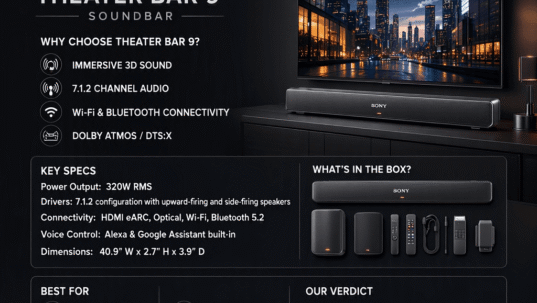
Sony’s entry level Bravia Theater Bar 5 sits at $349.99 and still offers a straightforward soundbar with HDMI port flexibility for buyers with older gear. The flagship Bravia Theater Bar 9 jumps to $869.99 and trims down to that single eARC soundbar connection we keep coming back to.
If you want the fuller technical breakdown of that entry level 5.1 configuration, our Sony Home Theatre 5.1 sound bar review covers room calibration and setup in more depth.
Bose New Lifestyle Ultra: A Flagship Soundbar Built Around Wireless Ecosystem
Bose reported revenue growth of 55 percent between January and June 2026, and premium audio demand is a big part of that story. The New Lifestyle Ultra Soundbar sits at $899 and leans hard into the nine driver, Atmos capable design that defines the current Bose flagship experience.
That flagship reputation comes with the same single connection philosophy we have seen across the category. One HDMI eARC soundbar link handles everything, while wireless rear speakers and a wireless subwoofer round out the sphere of sound around your seating area.
Anyone reading a Bose Lifestyle Ultra review before buying should weigh whether they will eventually add the wireless subwoofer and rear speakers, since that is where this system truly earns its flagship reputation.
Fewer wired ports does not mean less capability. It usually means the manufacturer trusts your TV and its wireless ecosystem to do more of the heavy lifting.
Samsung Music Studio 7 and 5: Wireless Speakers Replacing HDMI Sprawl
Samsung’s answer to the same question is its Music Studio 7 and Music Studio 5 speakers, priced at $499.99 and $299.99. These Wi Fi enabled units pair with Samsung’s Q Series soundbars through Q Symphony, letting the TV speakers and soundbar work together instead of you needing extra HDMI hardware at all.
The Music Studio 7 runs a 3.1.1 channel configuration on its own, while the Music Studio 5 keeps things simpler at 2.1 channels. Both extend your sphere of sound wirelessly rather than through another HDMI in and out chain.
If you are comparing this approach against a more traditional flagship, our breakdown of the Samsung flagship against the Sonos Arc Ultra is a good next stop, since both take very different approaches to expansion.
Why Budget and Compact Soundbars Still Keep Multiple HDMI Inputs
Not every soundbar is following this trend, and that is a good thing for a lot of households. If you have an older TV, a separate AV receiver, or a mix of legacy devices, a soundbar with HDMI in and out ports is still genuinely useful.
The Insignia lineup is a great example of this value focused approach. Our Insignia soundbar home theater speaker guide covers configurations from 2.1 up to 5.1.2 with a wireless sub, and several of those models keep more than one HDMI port for buyers who need it.
The Amazon Fire TV Soundbar Plus takes a similar middle ground. It pairs a compact bar with a wireless sub for deeper bass than the bar alone can deliver, while still relying on a single HDMI ARC connection for TV control and Alexa integration. One box units are simpler, but a soundbar plus subwoofer kit like this one adds meaningful bass depth compared to the bar alone.
You can read the full breakdown in our Amazon Fire TV Soundbar Plus review, and if you are short on space, our guide to the best soundbars for small living rooms covers several compact models with Atmos and wireless subs that still keep an HDMI speaker bar setup simple.
Finding the Best Soundbar for Your Home in 2026
So what does all of this mean for your actual buying decision. If your TV is from the last two or three years, a flagship soundbar with a single eARC connection will almost certainly serve you better than one buried in extra ports you will never use.
If you are still running an older receiver, a separate 4K box, or a legacy gaming console without HDMI 2.1, look for a soundbar with HDMI passthrough or multiple inputs instead. Our best budget soundbar with subwoofer roundup highlights several models that still prioritize that flexibility.
And if bass depth matters more to you than port count, our guide to soundbars with built in subwoofers is worth a look before you commit to any single flagship system.
Conclusion
Why Flagship Soundbars Are Ditching HDMI Inputs in 2026 really comes down to trust. Manufacturers trust that your TV already handles the switching, and they are redirecting that engineering budget toward better drivers, wireless expansion, and room calibration instead.
That is not a downgrade, it is a value proposition built for how people actually watch TV and play games today. Whether you land on a Sony, Bose, Samsung, or budget friendly Insignia setup, understanding this shift will help you pick the best soundbar for the gear you actually own, not the gear you had five years ago.
Frequently Asked Questions
Do I need HDMI inputs on a soundbar if my TV has enough ports?
Probably not. Since most 2026 flagship soundbars are ditching HDMI inputs in favor of a single eARC connection, your TV can handle switching between your console, streaming box, and cable box on its own.
What is the difference between HDMI ARC and eARC on a soundbar?
HDMI ARC supports basic stereo and compressed surround sound, while an eARC soundbar setup carries full, uncompressed Dolby Atmos and DTS X. This is the main reason flagship soundbars are ditching HDMI inputs while keeping eARC as the one connection that matters.
Will a soundbar with HDMI CEC let me use just one remote?
Yes. A soundbar with HDMI CEC lets your TV remote control power, input switching, and volume across your whole setup, which is part of why manufacturers feel comfortable dropping extra physical ports.
Is it worth buying a flagship soundbar without HDMI passthrough in 2026?
For most modern homes, yes. If your TV already supports HDMI 2.1 and eARC, a flagship soundbar without extra passthrough ports will still deliver full Atmos performance without any real compromise.
Which soundbars still offer multiple HDMI inputs in 2026?
Budget and mid range options like the Insignia lineup and several compact models built for small living rooms still include multiple HDMI ports for buyers with older or mixed AV setups. Flagship models from Sony, Bose, and Samsung have largely moved to the single eARC soundbar design instead.
Does losing HDMI inputs affect gaming performance on a soundbar?
Not if the soundbar keeps HDMI 2.1 passthrough, which supports 4K at 120Hz and variable refresh rate for consoles. Most flagship gaming focused bars keep this one input even while dropping everything else.
Why are flagship soundbars ditching HDMI inputs instead of adding more?
Because modern TVs already handle multiple HDMI 2.1 sources internally, a soundbar with extra ports duplicates hardware you already own. Manufacturers are redirecting that cost toward better drivers, wireless speaker ecosystems, and room calibration instead.